
Myth vs. Fact: Do Expensive, High-MERV Filters Really Protect Your AC, or Do They Choke It?
Are high-MERV filters better for your AC, or can they restrict airflow? Learn the truth about MERV ratings, dirty filters, airflow, frozen coils, efficiency, and choosing the right HVAC filter for your home.
6/12/20266 min read
Myth vs. Fact: Do Expensive, High-MERV Filters Really Protect Your AC, or Do They Choke It?
When homeowners shop for AC filters, the expensive ones usually make the biggest promises.
Better air quality. More dust control. Allergy protection. Pet dander removal. Cleaner indoor air.
Then someone says, “Don’t use those. High-MERV filters choke your AC.”
So which is true?
Do expensive, high-MERV filters protect your HVAC system, or do they hurt it?
The honest answer is this:
A better filter can protect your home and system, but the wrong filter can absolutely restrict airflow.
The goal is not to buy the highest MERV rating on the shelf. The goal is to use the highest-quality filter your HVAC system can handle without sacrificing airflow.
Let’s clear up the myths.
Myth: The Higher the MERV, the Better the Filter for Every Home
Fact: Higher MERV means better particle capture, not automatically better system performance.
MERV stands for Minimum Efficiency Reporting Value. It is a rating used to describe how well an air filter captures particles of different sizes.
A higher MERV filter can catch smaller particles than a lower MERV filter. That can be helpful for homes with pets, allergies, dust concerns, wildfire smoke exposure, or people sensitive to indoor air quality.
But MERV does not tell the whole story.
A filter also affects airflow. Your HVAC system is designed to move a certain amount of air across the indoor coil, through the blower, and into the home. If the filter creates too much resistance, airflow can drop.
That means the “best” filter is not always the highest-rated filter.
The best filter is the one that balances filtration and airflow.
Myth: High-MERV Filters Always Choke Your AC
Fact: A high-MERV filter does not automatically choke the system. A restrictive filter does.
This is where the conversation gets misunderstood.
A MERV 13 filter in one system may work perfectly fine. In another system, it may create too much restriction.
Why?
Because airflow depends on more than the MERV number.
Filter thickness matters. Filter size matters. Filter design matters. The return duct matters. The filter grille matters. The blower motor matters. The total static pressure of the duct system matters.
A 1-inch high-MERV filter can sometimes be more restrictive than a thicker 4-inch or 5-inch media filter with the same or similar MERV rating. That is because deeper filters often have more surface area for air to pass through.
More surface area can mean better filtration with less restriction.
So the issue is not simply “high MERV is bad.”
The issue is using a filter your system was not designed to breathe through.
Myth: Cheap Fiberglass Filters Protect Your AC Best
Fact: Cheap filters may allow more airflow, but they often do very little for cleanliness.
Basic fiberglass filters usually have low resistance, which can be good for airflow. But they also tend to catch fewer particles.
That means more dust can pass through the return side of the system and collect on the blower wheel, indoor coil, ductwork, and supply registers.
A cheap filter may keep large debris out of the equipment, but it may not do much to keep the system clean.
That matters because dirt inside the system can reduce performance over time. A dirty blower wheel moves less air. A dirty indoor coil absorbs less heat. Dust buildup inside the cabinet can affect efficiency, comfort, and indoor cleanliness.
A low-grade filter may not choke the system, but it may also fail to protect it well.
Myth: Expensive Filters Are Always Worth the Money
Fact: Some expensive filters are great. Others are overpriced for what your system needs.
Price does not always equal performance.
Some premium filters are well-designed and provide strong filtration with reasonable airflow resistance. Others may be too restrictive for certain systems, especially if they are thin, dense, and installed in a return that is already undersized.
The problem is that most homeowners do not know what their system can handle just by looking at the filter aisle.
That is why the filter decision should be based on the system, not just the packaging.
A good HVAC technician can look at your return setup, filter size, equipment needs, duct design, and static pressure to help determine what filter range makes sense.
Myth: If the Filter Fits, It Is Fine
Fact: Physical fit and airflow fit are not the same thing.
A filter can slide perfectly into the rack and still be the wrong choice.
If the filter is too restrictive, the blower may struggle to pull enough air through the system. That can cause weak airflow, longer run times, uneven comfort, higher energy use, and added strain on components.
In cooling season, restricted airflow can also contribute to frozen evaporator coils. When not enough warm air passes across the indoor coil, the coil can get too cold and begin to freeze.
Once ice forms, airflow gets even worse.
That is why “it fits” is not enough.
The filter has to fit the system’s airflow needs too.
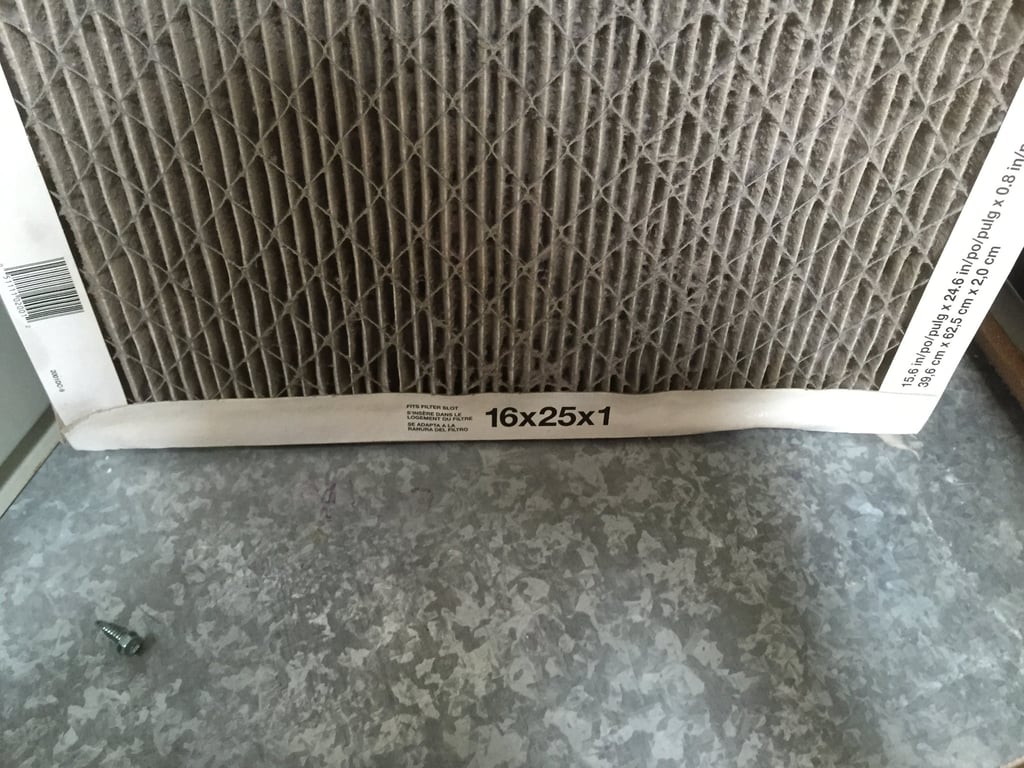
Myth: A Dirty Filter Means It Is Doing Its Job
Fact: A dirty filter may have done its job, but now it is becoming a problem.
A filter that collects dust is doing what it was designed to do. But once it gets loaded, it becomes harder for air to pass through.
That is when the filter changes from protection to restriction.
A dirty filter can reduce airflow, lower efficiency, make the system work harder, and allow dirt to bypass the filter if air starts finding gaps around it. It can also make comfort problems worse in rooms that already have weak airflow.
This is especially important in Arizona homes, where AC systems may run for hours a day during the summer. A filter that might last three months in mild weather may need to be changed sooner during heavy cooling season.
Myth: Filters Are Only About Air Quality
Fact: Filters also protect airflow, coils, efficiency, and equipment life.
Your filter is part of the HVAC system, not just an indoor air quality accessory.
A good filter helps keep dust and debris away from important components. That includes the indoor coil, blower wheel, and inside of the air handler or furnace.
A clean, properly selected filter helps maintain airflow. Good airflow helps the system move heat, control comfort, reduce freezing potential, and operate closer to its intended efficiency.
A neglected filter does the opposite.
It can make the system breathe through a clogged surface, forcing the blower to work harder and reducing the amount of air moving through the home.
Myth: MERV 13 Is Always the Best Residential Choice
Fact: MERV 13 can be a strong option, but only if the system can handle it.
MERV 13 is often recommended when indoor air quality is a priority because it captures smaller particles than many standard residential filters.
For some homes, MERV 13 is a great choice.
For others, especially systems with small return ducts, undersized filter grilles, older equipment, or thin 1-inch filter racks, it may be too restrictive.
This does not mean you should avoid MERV 13. It means you should confirm the system can support it.
If your goal is better filtration, one of the best upgrades may be installing a properly sized media filter cabinet. A thicker media filter can often provide better filtration with less airflow penalty than a restrictive 1-inch filter.
Signs Your Filter May Be Too Restrictive
A filter may be choking airflow if you notice:
Weak airflow from vents
Whistling or loud return noise
The filter bending or getting sucked inward
The AC running longer than normal
Hot rooms or uneven comfort
Indoor coil freezing
Higher energy bills
More dust bypassing around the filter slot
The system struggling after switching to a higher-MERV filter
These symptoms do not always mean the filter is the only problem, but they are worth paying attention to.
So What MERV Rating Should You Use?
There is no perfect answer for every home.
Many homes do well with a quality pleated filter in the MERV 8 to MERV 11 range. Homes with pets, allergies, dust issues, or outdoor air quality concerns may benefit from MERV 13 if the system can handle it.
But the right answer depends on your equipment and ductwork.
A system with a properly sized return and a deep media filter cabinet may handle higher filtration very well. A system with a small return and a thin 1-inch filter may struggle with the same rating.
When in doubt, ask a technician to check airflow and static pressure.
That is the difference between guessing and knowing.
The Best Filter Strategy for Homeowners
The best filter strategy is simple:
Use a filter your system can breathe through.
Change it before it gets clogged.
Make sure it fits tightly with no gaps.
Do not assume the most expensive filter is automatically best.
Do not assume the cheapest filter is protecting your system.
Upgrade filtration only if your system can support the added resistance.
Ask about airflow if you have hot rooms, frozen coils, weak vents, or high energy bills.
Your filter should protect your home without starving your HVAC system for air.
The Bottom Line
High-MERV filters are not automatically bad.
Cheap filters are not automatically safe.
Expensive filters are not automatically better.
The real question is whether the filter provides good filtration while allowing proper airflow.
A properly selected filter helps keep your HVAC system cleaner, protects the indoor coil and blower, supports better air quality, and helps maintain efficiency. The wrong filter, especially if it is too restrictive or left in too long, can reduce airflow and contribute to comfort problems, frozen coils, higher energy use, and system strain.
At SuperTech, we do not want homeowners guessing at the filter aisle. During maintenance, we can check your filter setup, airflow, return condition, coil cleanliness, and system performance so you know what your HVAC system actually needs.
Because the best filter is not the one with the biggest number.
It is the one your system can breathe through.
SuperTech Industries
Your trusted partner for all your solutions.
KNOWLEDGEABLE - AFFORDABLE - ADAPTABLE - DEPENDABLE
© 2024. All rights reserved.
1530 E Williams Field Road
Ste. 201
Gilbert, AZ 85295


ROC 361165
Licensed - Bonded - insured